UK military headcount grew.
Which forces gained?
Original, reproducible arithmetic shows that the RAF Regular headcount accounted for approximately 57.9% of the +1,450 change in the combined rounded July UK Regular figures. That is NOT the RAF share of new recruits.
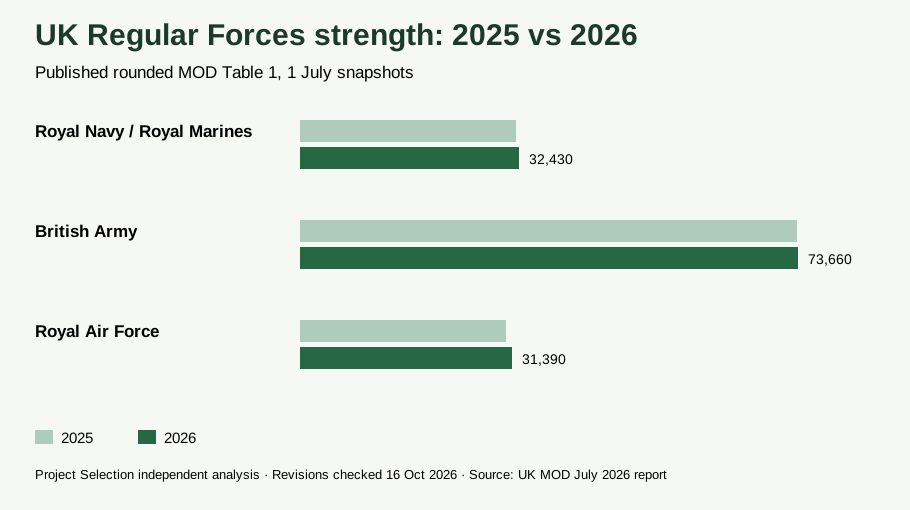
One-year change, by service
The service rows refer only to UK Regular Forces. Royal Navy and Royal Marines are one combined reported category.
| Service | July 2025 | July 2026 | Change | % |
|---|---|---|---|---|
| Royal Navy / Royal Marines | 31,990 | 32,430 | +440 | +1.4% |
| British Army | 73,490 | 73,660 | +170 | +0.2% |
| Royal Air Force | 30,550 | 31,390 | +840 | +2.7% |
| All UK Regular Forces | 136,030 | 137,480 | +1,450 | +1.1% |
Attributed summary: Project Selection analysis of revised Ministry of Defence July 2026 figures finds UK Regular strength increased by about 1,450 from July 2025. RAF Regular numbers increased by 840, Army by 170, and Royal Navy/Royal Marines by 440. These are reported rounded headcounts, not a recruitment acceptance or intake measure.
What is original here?
The official counts are public. The side-by-side service decomposition, proportional contribution of the RAF to the increase, comparison with 2021 and explanation of rounding are an independently assembled reporting aid. A share of a change in serving headcount cannot be described as “share of recruits”.
How to verify before quoting
Open MOD Table 1, revised 23 September 2026. Subtract the same service and population at the two July dates. All cells are rounded to tens. The 2021 comparison relies on another MOD source vintage (2022 Table 1), so the history is compiled from different editions. View the full ten-year source record.
120 observations with dated sources (CSV) ↓Compare a different recruitment measure ↗