Someone posts a punishing workout. A hundred comments say it's perfect for the Paras or Royal Marines. There are sandbags, a hill, a stopwatch and possibly someone vomiting. It looks impressive. But it doesn't tell a candidate whether it's appropriate for their body, their stage of training or the test their recruiter will actually use.
If you're starting from scratch, that sort of thing can persuade you that military preparation is supposed to hurt every day. If you're already a good runner, it might persuade you to ignore strength. Neither is a particularly useful way to prepare.
First, find out what you're applying for
Before you work out how to train, answer a simpler question: what is the physical assessment for your specific role at your specific stage? The British Army, Royal Marines, RAF and Royal Navy do not all assess candidates in the same way. Within a service, the requirements can differ by job and point in the application process.
One candidate needs to understand a published run requirement. Another may be preparing for a multi-stage fitness test. A third is focusing on assessment events that happen much later in training. Copying the same supposedly elite plan makes little sense.
Start with the official benchmarks we can actually source. Where they don't apply to your role, we say so. Where guidance changes, your recruiter’s current instructions win.
Running and strength aren't rivals
Running is useful because aerobic fitness underpins so much sustained effort. But you don't become robust merely by adding miles. Gradual strength work can support movement quality, general capacity and the ability to handle different activities. Mobility and adequate recovery help you continue the training you planned.
You don't have to turn every week into a complicated laboratory exercise. Think about whether your week has enough variety to build the main qualities — and whether it can fit around your job, sleep and family.
That last point is easy to forget. If you've got an hour before work and two evenings free, a manageable schedule that happens regularly beats the perfect six-day routine you abandon after ten days.
What a real outdoor coach notices
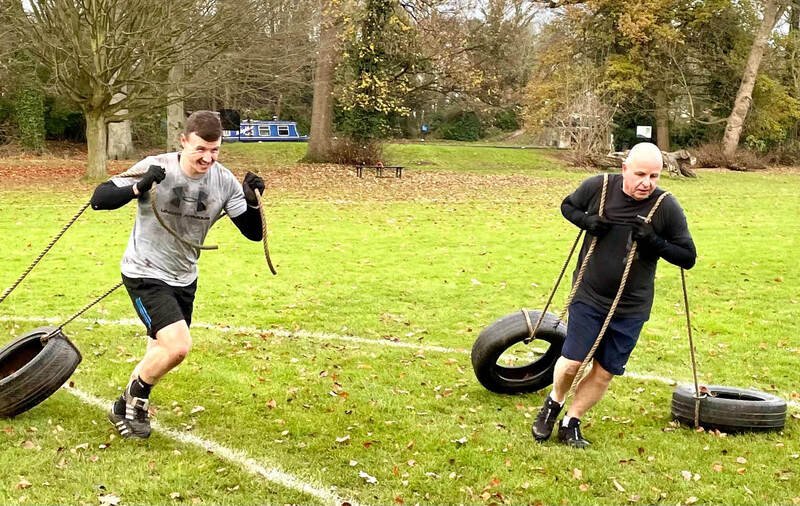
Scott Henderson spent 22 years in the British Army according to his biography, served in REME, worked in policing and now runs 1MOREREP Health & Fitness. His business isn't a military recruitment centre. It's a place where ordinary people do outdoor strength and conditioning, with different abilities in the same session.
In Scott's published account, he talks about someone looking doubtful when he asks them to carry a log. Weeks later the same person is stronger and helping somebody else try it. There's a lesson there for applicants: showing up and making manageable progress is rarely cinematic, but it's repeatable.
We haven't asked Scott to prescribe a military selection programme for Project Selection. This is our independent synthesis of publicly described coaching practice, combined with the route-specific official guidance linked throughout this website.
Four questions worth asking before a training session
1. What's the purpose? Is the session building an aerobic base, learning a movement, practising an applicable test or simply helping you maintain a habit? You should be able to explain why it belongs in your week.
2. Can I recover from it? Repeating hard efforts without enough recovery can reduce consistency and increase injury risk. How a session fits with the last few days matters as much as how it feels in isolation.
3. Am I comparing the right things? A two-kilometre run result cannot tell you whether you'll succeed at a Royal Marines Candidate Preparation Course. An MSFT score is only useful when compared with the current threshold for the matching service, age and role.
4. What will I do next week? A session that leaves you unable to train again for a long time may be less productive than a manageable one you can repeat and gradually adapt.
A week that fits your actual life
Some people can train on two days. Others can fit in four or five. Neither number tells us exactly what load you should lift or what pace you should run. That's why our free training week builder produces a broad outline of activities rather than a personalised workout prescription. It gives you a starting conversation with yourself or a qualified coach: is there room for some aerobic work, strength, mobility and recovery?
Use it alongside your candidate preparation board for all the non-fitness tasks that are easy to overlook, and with our running splits calculator where a measured run is relevant to your route.
Don't pay for a promise somebody can't make
Some coaching can be valuable, especially if you're new to training or repeatedly getting injured. But anybody promising guaranteed selection, secret assessment material or an invented universal pass standard should prompt more questions, not a booking. Our coach-checking guide helps you test qualifications, insurance, relevance to your specific route and whether the sessions are actually appropriate for you.
Scott's background gives us a useful example of sustained experience. It does not turn this site into an MOD-approved training business or mean Scott has reviewed the individual fitness advice on it. That distinction protects the reader more than a string of impressive job titles does.
Put next week on paper.
Choose your actual recruitment route and available days. Get an editable balance of running, strength and rest, then download it without registering.
Sources and further reading: Scott's first-party coaching biography, British Army fitness recruitment guidance, Royal Marines official joining route. Educational editorial only; confirm present-day official tests and medical suitability independently. Updated 17 October 2026.